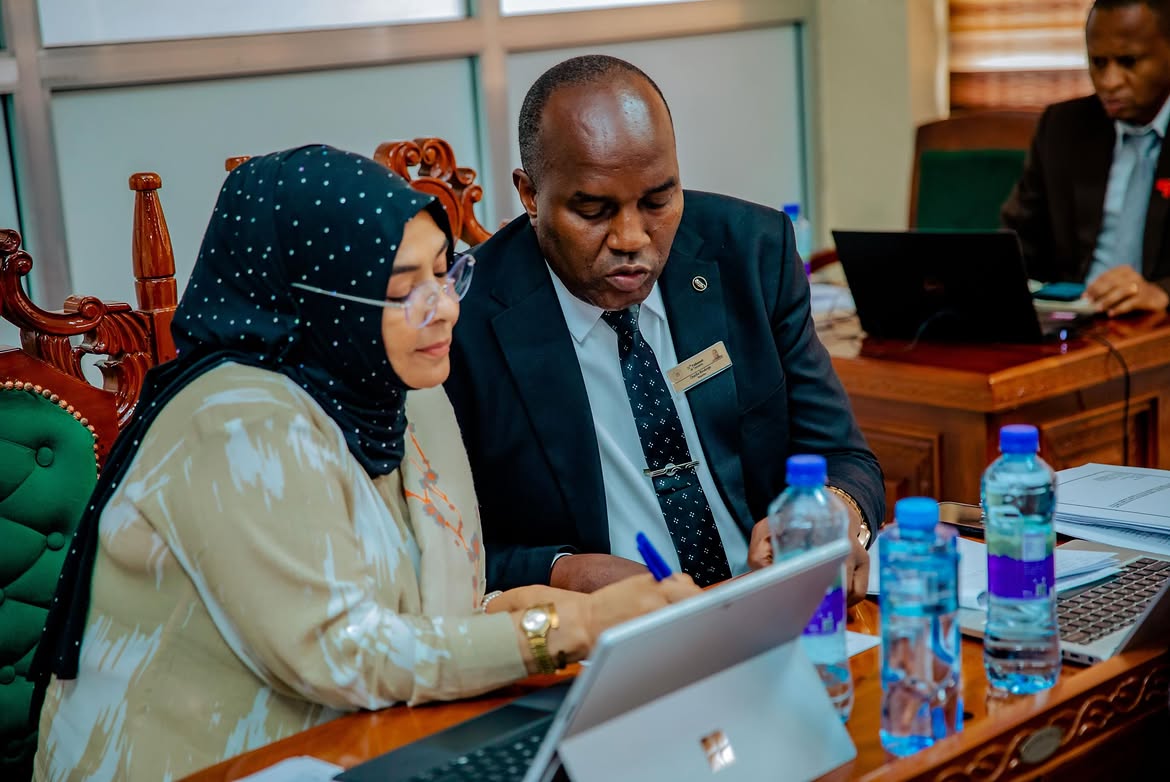
The Ministry of Foreign Affairs and East African Cooperation has expanded its working relationship with Tanzania's Parliament so that legislators representing the country abroad can advance its agenda and national interests more effectively, according to Daily News.
The ministry's Permanent Secretary, Charles Kadonya, announced the arrangement in Dodoma on October 15, 2026, while delivering the ministry's report to the Parliamentary Standing Committee on Foreign Affairs, Defence and Security (NUU), which is chaired by Najma Murtaza Giga.
Why it matters
Tanzania sits in seven parliamentary forums, and the positions its delegates take in those rooms can shape how the country is treated on trade, security and regional cooperation. Daily News reports that the ministry's concern was practical: some representatives were not receiving schedules or information about the activities of the forums they attended. A guideline finalised in April 2025 with the Office of Parliament is meant to close that gap by improving coordination, getting information to delegates on time and sharpening how Tanzania's positions are prepared before international discussions begin.
The effort also ties into Tanzania's Foreign Policy of 2001, which was revised in 2024 and stresses regional and international cooperation as a way to protect and advance the country's political, economic, defence and social interests.
What the guideline is meant to fix
According to Daily News, the guideline followed directives issued by the relevant parliamentary committee in August 2024. Those directives came after concerns surfaced that some representatives were not being given schedules and details about activities organised by the forums in which they took part.
Kadonya said the document was developed in collaboration with the Office of Parliament and finalised in April 2025. Its stated aims are threefold: better coordination between the ministry and Parliament, timely access to information for the lawmakers involved, and stronger preparation of Tanzania's positions for international discussions.
In practice, that means delegates are expected to track policy debates, bills and resolutions as they move through each forum, secure and then advocate the government's official stance, and flag any consequences those decisions could carry for Tanzania.
The seven forums Tanzania sits in
Daily News lists the parliamentary bodies in which Tanzania holds membership:
- The East African Legislative Assembly (EALA)
- The Southern African Development Community Parliamentary Forum (SADC-PF)
- The Pan-African Parliament (PAP)
- The Parliamentary Forum of the International Conference on the Great Lakes Region (FP-ICGLR)
- The Organisation of African, Caribbean and Pacific States–European Union Parliamentary Assembly (OACPS-EU)
- The Commonwealth Parliamentary Association (CPA)
- The Inter-Parliamentary Union (IPU)
Each of these bodies handles its own set of policy questions, and the responsibilities of Tanzania's representatives are similar across them: follow the debates, understand the bills and resolutions on the table, obtain the government's official position, argue for it, and assess what the outcome could mean for the country.
Committee members respond
Members of the NUU Committee welcomed the ministry's work on the guideline, Daily News reports. They also credited the ministry with coordinating the 153rd IPU Assembly successfully. That gathering was held in Arusha from October 5 to 9, 2026.
The timing of the committee's review is notable. The Arusha assembly put Tanzania in the position of host rather than simply participant, and the committee's praise suggests the ministry's handling of that event is being read as evidence that the coordination machinery it has built can function under pressure.
A quiet but consequential file
Parliamentary diplomacy rarely draws the attention that ministerial summits do, but the work done in these forums is where resolutions and model laws often begin. A delegate who arrives without the government's position, or who learns of a debate only after it has started, is a delegate who cannot influence the outcome.
The guideline is designed to prevent that. By formalising how the ministry and Parliament share information, it creates a paper trail and a schedule where previously there were complaints about gaps. Whether that translates into more effective advocacy will depend on how consistently the two institutions use it.
The ministry has framed the initiative as part of a broader alignment with the revised foreign policy, which treats regional and international cooperation as a means of protecting Tanzanian interests rather than an end in itself. That framing puts the emphasis on outcomes: what Tanzania gets out of the debates, bills and resolutions its representatives encounter.
What to watch is whether the coordination holds as the next rounds of forum business get under way, and whether delegates report the timely access to information the guideline promises.